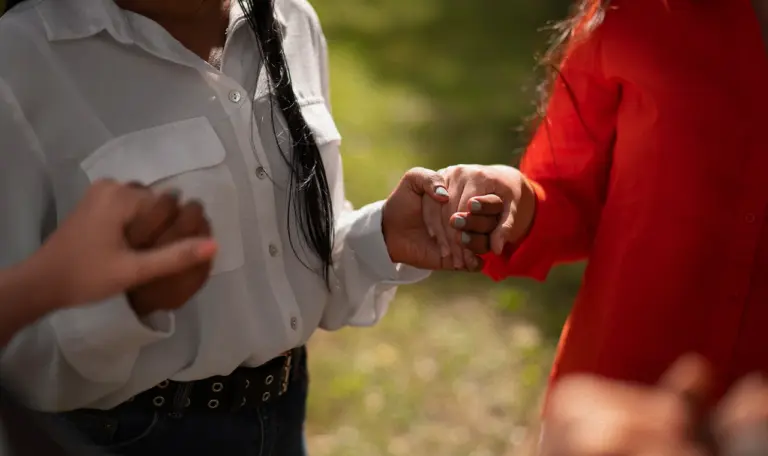
From the very beginning of Scripture, we see that relationships are part of God’s design. In Genesis, God created humanity for relationship—with Him and with one another.


Introduction: We Were Created for Community
Human beings were never created to live completely alone.
From the very beginning of Scripture, we see that relationships are part of God’s design. In Genesis, God created humanity for relationship—with Him and with one another. Throughout the Bible, we see families, communities, friendships, churches, disciples, and groups of believers walking together through both joyful and difficult seasons.
Yet today, many people experience something very different.
We live in a world that is more connected technologically than ever before. We can communicate instantly with someone thousands of miles away. We can share photographs, messages, videos, and experiences within seconds. We can participate in online communities without ever meeting the people around us face-to-face.
And still, loneliness continues to be a reality for many people.
A person can be surrounded by people and still feel alone.
A young person can attend school or college every day and still feel that nobody understands them.
A parent can take care of an entire family while secretly feeling exhausted and isolated.
An elderly person can live in a neighborhood filled with people while going days without meaningful conversation.
Someone going through financial difficulty may feel ashamed to ask for help.
Someone struggling emotionally may be afraid that others will judge them.
Someone who has experienced disappointment may slowly withdraw from relationships.
This is why community matters.
Community is not simply having people around us. True community is knowing that there are people who care, people who listen, people who pray, people who encourage, and people who are willing to walk alongside us.
At Joy Foundation, we believe that serving people is not only about meeting physical needs. It is also about building relationships and creating spaces where people can experience belonging, encouragement, compassion, and hope.
A meal can meet a physical need.
A conversation can meet an emotional need.
A prayer can strengthen a weary heart.
A friendship can remind someone that they are not alone.
A community can help a person rediscover hope.
This is why community outreach is such an important part of ministry.
We believe that every person matters, every story matters, and no one should have to walk through life completely alone.
1. What Is True Community?
The word “community” is used frequently today.
We hear about online communities, professional communities, neighborhood communities, church communities, and social communities.
But what actually makes a community?
A community is more than a group of people who happen to be in the same place.
A crowd is not necessarily a community.
A community is formed when people begin to share life with one another.
It involves relationship.
It involves trust.
It involves responsibility.
It involves belonging.
It involves the willingness to care about someone else’s wellbeing.
Biblical community takes this even further.
Christian community is centered not simply around common interests, but around a shared relationship with God and a commitment to love one another.
Jesus said in John 13:35:
“By this everyone will know that you are my disciples, if you love one another.”
Notice that Jesus did not say people would recognize His followers simply because of their knowledge, buildings, programs, or religious activities.
He pointed toward love.
Love is one of the clearest signs of authentic Christian community.
When people are hurting, we care.
When someone succeeds, we celebrate.
When someone falls, we help them stand.
When someone is hungry, we respond.
When someone is lonely, we make space.
When someone is discouraged, we encourage them.
When someone needs prayer, we pray.
This is community in action.
2. The Biblical Picture of Community
The early church gives us one of the clearest pictures of Christian community in the Bible.
Acts 2 describes believers gathering together, sharing meals, praying, learning, worshiping, and supporting one another.
They were not simply attending meetings.
They were sharing life.
Acts 2:44–45 describes believers caring for one another and sharing resources according to people’s needs.
This is a powerful picture because it shows that Christian community has both a spiritual and practical dimension.
They worshiped together.
They learned together.
They prayed together.
They ate together.
They helped one another.
They shared their resources.
They celebrated together.
They endured challenges together.
The church was not simply a weekly event.
It was a family.
This does not mean that the early church was perfect. Scripture records disagreements, misunderstandings, conflicts, and failures within the early Christian community.
But they were called to continue growing in love, forgiveness, humility, unity, and service.
That is important for us today.
A healthy community is not a community without problems.
A healthy community is one that knows how to respond to problems with grace, truth, forgiveness, and love.
3. Why Loneliness Is So Difficult
Loneliness is more than simply being physically alone.
A person can be alone and feel peaceful.
Another person can be surrounded by hundreds of people and feel deeply lonely.
Loneliness often comes from the absence of meaningful connection.
People need to know that someone sees them.
They need to know that their story matters.
They need relationships where they can be honest without constantly pretending that everything is fine.
This is especially important during difficult seasons.
When life is going well, it can be easy to maintain relationships.
But difficult seasons reveal the importance of genuine community.
When someone loses a job, who will encourage them?
When a family faces financial hardship, who will stand beside them?
When someone experiences grief, who will sit with them?
When a young person struggles with identity, purpose, or direction, who will listen?
When someone feels spiritually discouraged, who will pray with them?
These are the moments when community becomes more than a concept.
It becomes necessary.
4. The Ministry of Presence
One of the most powerful ways we can serve another person is simply by being present.
Sometimes we think we need the perfect words.
We want to know exactly what to say.
But there are moments when words are not enough.
Sometimes people simply need someone to sit with them.
Someone to listen.
Someone to say, “I am here.”
Someone to remind them that they do not have to face everything alone.
The Bible gives us many examples of people experiencing difficult circumstances in the presence of others.
When Job suffered tremendous loss, his friends initially came and sat with him in silence.
Although their later responses became problematic, their initial willingness to be present demonstrates something important.
Presence matters.
When we show up for people, we communicate something powerful:
“Your pain matters to me.”
This is one reason community outreach should not be limited to distributing resources.
Resources matter.
But relationships matter too.
A box of food may help someone today.
A caring relationship may continue supporting them long after the food is gone.
Both can be important.
5. Community Begins With Seeing People
One of the most powerful things we can do is learn to see people.
Not simply look at them.
See them.
There is a difference.
To see someone means to notice them as a person.
It means recognizing that they have a story.
They have hopes.
They have fears.
They have responsibilities.
They have experiences that shaped them.
They have strengths.
They have weaknesses.
They have dreams.
They have value.
Jesus repeatedly demonstrated this kind of attention.
He noticed people others ignored.
He spoke to people others avoided.
He welcomed people who were excluded.
He spent time with people whom society often overlooked.
Christian ministry should carry the same heart.
Before asking, “What can we give this person?” we can also ask:
“Who is this person?”
What do they need?
What are they experiencing?
What would dignity look like for them?
What would encouragement mean to them?
What would genuine community look like?
These questions help transform ministry from a program into a relationship.
6. Community and Practical Support
Community is not only emotional or spiritual.
It also includes practical care.
People cannot always separate their emotional and physical needs.
Someone who is hungry may feel stressed.
Someone who cannot afford basic clothing may experience embarrassment.
A family struggling financially may experience tension at home.
Someone without transportation may struggle to access opportunities.
Practical needs can affect emotional wellbeing.
This is why community care should include tangible support when possible.
Food assistance can help families manage difficult periods.
Clothing and shoes can meet everyday needs.
Essential supplies can reduce financial pressure.
Community outreach can connect people with resources.
Prayer and spiritual encouragement can provide hope.
These different forms of support work together.
A ministry that cares about the whole person asks both:
“How can we help with the immediate need?”
and
“How can we walk with this person beyond the immediate need?”
That second question is where long-term community begins.
7. The Importance of Listening
One of the most overlooked forms of service is listening.
We often want to fix problems.
We want to give advice.
We want to provide solutions.
But sometimes people need to be heard before they are ready to receive advice.
Listening requires patience.
It means putting aside distractions.
It means allowing another person to finish speaking.
It means resisting the temptation to immediately compare their experience with our own.
It means asking questions.
It means being willing to say:
“I understand.”
“I am listening.”
“Tell me more.”
“How can I support you?”
“How can I pray for you?”
Listening communicates value.
When we listen, we tell another person:
“Your story is worth hearing.”
That can be deeply meaningful.
For volunteers and ministry workers, listening should be considered an essential part of outreach.
We should not approach people only with answers.
We should approach them with compassion.
8. Building Community Across Differences
A strong community does not require everyone to be identical.
People come from different backgrounds.
They have different personalities.
They have different experiences.
They have different ages, skills, interests, cultures, and perspectives.
Christian community should have room for these differences.
Unity does not mean uniformity.
The New Testament repeatedly teaches that the body of Christ consists of many members with different gifts and functions.
This diversity can make a community stronger.
One person may be good at organization.
Another may be good at teaching.
Another may be good at encouraging.
Another may be good at hospitality.
Another may be good at serving behind the scenes.
Another may have professional skills.
Another may simply have a gift for making people feel welcome.
Each contribution matters.
When we value different gifts rather than competing with one another, community becomes healthier.
9. The Role of Young People in Community
Young people have a unique place in community ministry.
They are often described as the future.
But young people are not merely the future.
They are part of the present.
They have ideas.
They have energy.
They have creativity.
They have questions.
They have gifts.
They have the ability to influence their peers.
A healthy ministry should give young people opportunities to participate rather than simply expecting them to observe.
They can volunteer.
They can participate in outreach.
They can help organize activities.
They can use technology and social media creatively.
They can serve younger children.
They can participate in prayer.
They can develop leadership skills.
Most importantly, they can discover that their lives have purpose.
Young people need communities where they can ask honest questions without fear of being immediately judged.
They need mentors who will listen.
They need examples of authentic faith.
They need opportunities to serve.
A young person who discovers meaningful community early in life can carry those values into adulthood.
10. Community and the Elderly
While young people need community, older adults do as well.
Elderly people can experience loneliness, especially after retirement, the loss of friends or spouses, changes in health, or reduced mobility.
Sometimes their greatest need is not a complicated program.
It may simply be a visit.
A conversation.
A phone call.
A prayer.
Help with a practical task.
An invitation to participate.
The elderly have something valuable to offer as well: experience.
They carry stories.
They carry wisdom.
They have lived through changing generations.
They have learned lessons that younger people may not yet understand.
Healthy community creates opportunities for generations to interact.
Young people can learn from older adults.
Older adults can be encouraged by younger generations.
Families can become stronger when different generations care for one another.
This is part of the beauty of community.
11. Families Need Community Too
Families are often expected to handle everything on their own.
Parents are expected to provide.
Children are expected to adjust.
Families are expected to manage financial challenges, education, work, relationships, responsibilities, and unexpected difficulties.
But families need support too.
A healthy community can become a network of encouragement.
It can provide practical help during difficult seasons.
It can create opportunities for families to connect with others.
It can provide safe environments for children.
It can offer prayer and spiritual encouragement.
It can remind parents that they do not have to carry every burden alone.
Strong families contribute to strong communities.
And strong communities can help families become stronger.
This relationship works in both directions.
12. Serving Without Judgment
One of the biggest barriers to community can be judgment.
People may avoid asking for help because they are afraid of what others will think.
They may worry that someone will criticize their choices.
They may feel ashamed of their circumstances.
They may fear being labeled.
Christian service requires humility.
We must remember that we are all recipients of grace.
Nobody has a perfect story.
Nobody has made perfect decisions.
Nobody has experienced a life without difficulty.
When we serve others, we should do so without placing ourselves above them.
Galatians 6:2 encourages believers to carry one another’s burdens.
That language is important.
It does not say to shame people for having burdens.
It says to help carry them.
Community should become a place where people can receive support while also being encouraged toward growth and responsibility.
Grace does not eliminate truth.
But truth should be communicated with love.
13. The Importance of Trust
Community cannot exist without trust.
People need to know that their stories will be treated with respect.
They need to know that volunteers will behave responsibly.
They need to know that leaders will act with integrity.
They need to know that resources will be handled responsibly.
They need to know that vulnerable people will be protected.
Trust takes time to build.
It can be lost quickly.
For this reason, ministries should take responsibility seriously.
Integrity should not be treated as optional.
Good intentions are not enough.
A ministry must work toward responsible systems, appropriate accountability, careful stewardship, respectful communication, and ethical conduct.
When people trust an organization, they are more likely to participate.
Volunteers feel safer.
Donors feel confident.
Community members feel respected.
Partnerships become stronger.
Trust creates the foundation for long-term impact.
14. Community Is Built Through Small Habits
People sometimes imagine that building community requires large events.
Events can certainly help.
But community is usually built through smaller, repeated actions.
Remembering someone’s name.
Checking on someone.
Inviting someone for a meal.
Calling someone who has been absent.
Celebrating someone’s achievement.
Praying for someone.
Helping someone carry something.
Welcoming someone new.
Following up after an outreach event.
These small actions communicate consistency.
And consistency builds trust.
A person may not remember every detail of a large event.
But they may remember the person who regularly asked how they were doing.
They may remember the volunteer who greeted them.
They may remember the person who prayed with them.
They may remember someone who showed up when life was difficult.
Community grows through repeated acts of care.
15. The Difference Between Charity and Relationship
Charity can provide immediate assistance.
Relationship provides connection.
Both are valuable.
But when charity happens without relationship, people can sometimes feel like recipients rather than members of a community.
The goal of Christian outreach should therefore be to move beyond transactions.
Instead of only asking:
“How many people did we serve?”
We should also ask:
“Did people feel welcomed?”
“Did people feel respected?”
“Did we listen?”
“Did we create opportunities for connection?”
“Did we follow up?”
“Did people find a place where they belong?”
These questions do not make practical assistance less important.
They make it more meaningful.
A meal can become the beginning of a relationship.
A clothing donation can become an opportunity for connection.
A prayer can open a door to deeper encouragement.
A volunteer opportunity can help someone discover purpose.
This is how community develops.
16. Prayer as the Foundation of Community
Christian community should be built on prayer.
Prayer changes the way we see people.
When we pray for someone, we begin to carry their situation differently.
We become more attentive.
We become more compassionate.
We become more dependent on God.
Prayer also reminds us that ministry is not ultimately about our ability.
We can organize.
We can plan.
We can volunteer.
We can donate.
We can communicate.
But we need God’s wisdom and grace.
Prayer should therefore be part of every ministry initiative.
Pray before outreach.
Pray during outreach.
Pray after outreach.
Pray for volunteers.
Pray for donors.
Pray for families.
Pray for young people.
Pray for community leaders.
Pray for opportunities.
Pray for wisdom.
Pray for provision.
And pray that every act of service would reflect Christ.
17. When Community Faces Conflict
No community is free from disagreement.
Whenever people work together, differences will arise.
There may be misunderstandings.
There may be different opinions.
There may be personality conflicts.
There may be disappointments.
Christian community does not eliminate conflict.
It teaches us how to handle conflict differently.
Scripture calls believers to humility, forgiveness, patience, and reconciliation.
This requires maturity.
Sometimes we need to apologize.
Sometimes we need to forgive.
Sometimes we need to clarify misunderstandings.
Sometimes we need to establish boundaries.
Sometimes difficult conversations are necessary.
But the goal should not be winning an argument.
The goal should be restoration wherever possible.
A healthy community does not pretend problems do not exist.
It learns how to address them in a constructive way.
18. Community and the Digital World
Technology has changed how people build relationships.
Digital platforms can be useful tools for ministry.
Social media can spread information.
Online groups can connect people.
Video calls can help people communicate across distances.
Digital campaigns can mobilize volunteers and donors.
Online content can encourage people who may never physically attend a ministry gathering.
These are valuable opportunities.
But digital connection should not completely replace human connection.
A comment is not always the same as a conversation.
A follower is not necessarily a friend.
A social media reaction is not necessarily meaningful support.
Ministries should use technology wisely while continuing to prioritize real relationships.
The goal should be to use digital tools to strengthen community rather than substitute for it.
19. Creating a Culture of Welcome
A community begins to grow when people feel welcome.
For someone new, the first few minutes can be significant.
Will anyone greet me?
Will anyone talk to me?
Will I know where to go?
Will someone notice if I am uncomfortable?
Will I be accepted?
These questions may not be spoken aloud, but people often experience them internally.
Creating a welcoming environment requires intentionality.
Smile.
Introduce yourself.
Learn names.
Give clear information.
Help people understand what is happening.
Invite them to participate.
Do not assume that everyone already understands the environment.
A simple welcome can become the first step toward belonging.
And belonging can become the beginning of transformation.
20. From Community to Mission
Healthy community should not become inward-looking.
The purpose of community is not simply to make ourselves comfortable.
Christian community should also look outward.
When people experience love and belonging, they can become equipped to extend that same love to others.
This creates a movement.
People care for one another.
Then they begin caring for their neighbors.
They serve their communities.
They invite others.
They identify needs.
They respond.
Community becomes mission.
This is why outreach and community are closely connected.
We gather so that we can be strengthened.
We are strengthened so that we can serve.
We serve so that others can experience hope.
And those who experience hope can become part of the community.
The cycle continues.
21. How You Can Help Build Community
You do not need to start a large organization to build community.
You can begin with the people around you.
Invite Someone In
If you know someone who feels isolated, invite them for a meal, conversation, or community activity.
Listen
Give someone your full attention.
Ask questions.
Allow them to share.
Volunteer
Give your time to community outreach initiatives.
Help with food distribution, clothing support, events, administration, communication, or other ministry needs.
Give
Financial generosity can help create resources and opportunities for community service.
Pray
Pray for people by name.
Ask God to show you where you can help.
Encourage
Send a message.
Make a phone call.
Speak words of hope.
Celebrate someone’s progress.
Share Your Skills
Your professional or personal skills may be useful to a ministry.
Design.
Photography.
Writing.
Technology.
Administration.
Teaching.
Organization.
Communication.
Hospitality.
There are many ways to serve.
Welcome Someone New
Sometimes the simplest ministry is making sure nobody stands alone.
22. Why Your Contribution Matters
You may think your contribution is too small.
But communities are built from individual contributions.
One volunteer can make someone feel welcome.
One donor can help provide essential resources.
One prayer partner can strengthen a ministry.
One conversation can change someone’s day.
One invitation can introduce someone to a supportive community.
One act of generosity can inspire another.
Your contribution does not need to be enormous to matter.
Faithfulness is more important than visibility.
You may never know the full impact of your actions.
That is okay.
The purpose of service is not always to see the final result.
Sometimes we simply do our part and trust God with the outcome.
23. The Joy of Serving Together
There is a unique joy that comes from serving alongside others.
When volunteers work together, relationships develop.
People laugh together.
They solve problems together.
They carry responsibilities together.
They pray together.
They celebrate successes together.
They learn from mistakes together.
And eventually, they become more than coworkers.
They become a community.
This is one of the unexpected blessings of serving others.
You begin by wanting to help someone else.
But along the way, you discover that you are also being changed.
Service can teach patience.
It can teach humility.
It can teach gratitude.
It can teach teamwork.
It can teach compassion.
It can teach dependence on God.
It can reveal gifts you did not know you had.
It can introduce you to people you would never otherwise meet.
Serving others can therefore transform both the giver and the receiver.
24. Joy Foundation and the Vision of Community
At Joy Foundation, we believe community should be a place where people are seen, valued, supported, and encouraged.
Our mission is not simply about distributing resources.
It is about people.
It is about families.
It is about young people.
It is about individuals facing difficult circumstances.
It is about volunteers who want to make a difference.
It is about donors who want their resources to become a blessing.
It is about prayer partners who stand with us.
It is about creating opportunities for people to serve.
Our areas of ministry can include community outreach, food and essential support, clothing and shoes, prayer, spiritual encouragement, and other initiatives designed around real community needs.
We want to serve with compassion.
We want to give with dignity.
We want to listen before assuming.
We want to build relationships rather than simply complete activities.
And we want Christ to remain at the center of everything we do.
The goal is not simply to create a larger organization.
The goal is to create greater impact.
25. A Community Where Everyone Has a Place
Imagine a community where a person who is struggling knows where to turn.
Imagine a young person who knows there are adults who believe in them.
Imagine a family that knows they do not have to face every difficulty alone.
Imagine an elderly person who receives regular encouragement.
Imagine a volunteer who discovers that their skills can serve others.
Imagine a donor who knows their generosity is helping meet genuine needs.
Imagine people from different backgrounds working together for the good of their community.
This kind of community does not happen automatically.
It requires people.
It requires commitment.
It requires patience.
It requires generosity.
It requires prayer.
It requires people who are willing to say:
“I can help.”
That is where transformation begins.
Conclusion: No One Should Walk Alone
Life was never meant to be lived completely alone.
We need one another.
We need people who will encourage us when we are discouraged.
We need people who will celebrate with us when we succeed.
We need people who will pray with us when we are struggling.
We need people who will listen when we need to talk.
We need people who will help us when we cannot manage everything ourselves.
And we need opportunities to become those people for someone else.
This is the beauty of Christian community.
We receive.
We give.
We are encouraged.
We encourage.
We are served.
We serve.
We are prayed for.
We pray.
We are welcomed.
We welcome.
The community becomes stronger when everyone recognizes that they have both something to receive and something to contribute.
At Joy Foundation, we believe that this is part of what it means to live out the love of Christ.
Community is not simply about gathering people together.
It is about helping people discover that they belong.
It is about creating relationships that provide encouragement and support.
It is about meeting practical needs while caring for the whole person.
It is about creating opportunities for people to serve.
It is about making room for young and old, volunteers and donors, families and individuals.
It is about building bridges instead of walls.
And it is about showing through our actions that every person has value.
You can be part of this.
You can volunteer your time.
You can give financially.
You can donate essential items.
You can pray.
You can share the mission.
You can use your skills.
You can simply show up for someone who needs a friend.
You may never know how much one small act of kindness means to another person.
But God can use it.
A conversation can become a relationship.
A relationship can become community.
Community can create hope.
Hope can inspire change.
And change can reach far beyond one individual.
So let us choose to build communities where people are not forgotten.
Let us make room for those who feel alone.
Let us care for those who are struggling.
Let us welcome those who are searching for belonging.
Let us serve without judgment.
Let us give without seeking recognition.
Let us pray with faith.
Let us listen with compassion.
Let us work together with humility.
And let us keep Christ at the center of our service.
Because no one should have to walk alone.
Together, we can build a community where compassion is lived, hope is shared, and every person knows that they matter.